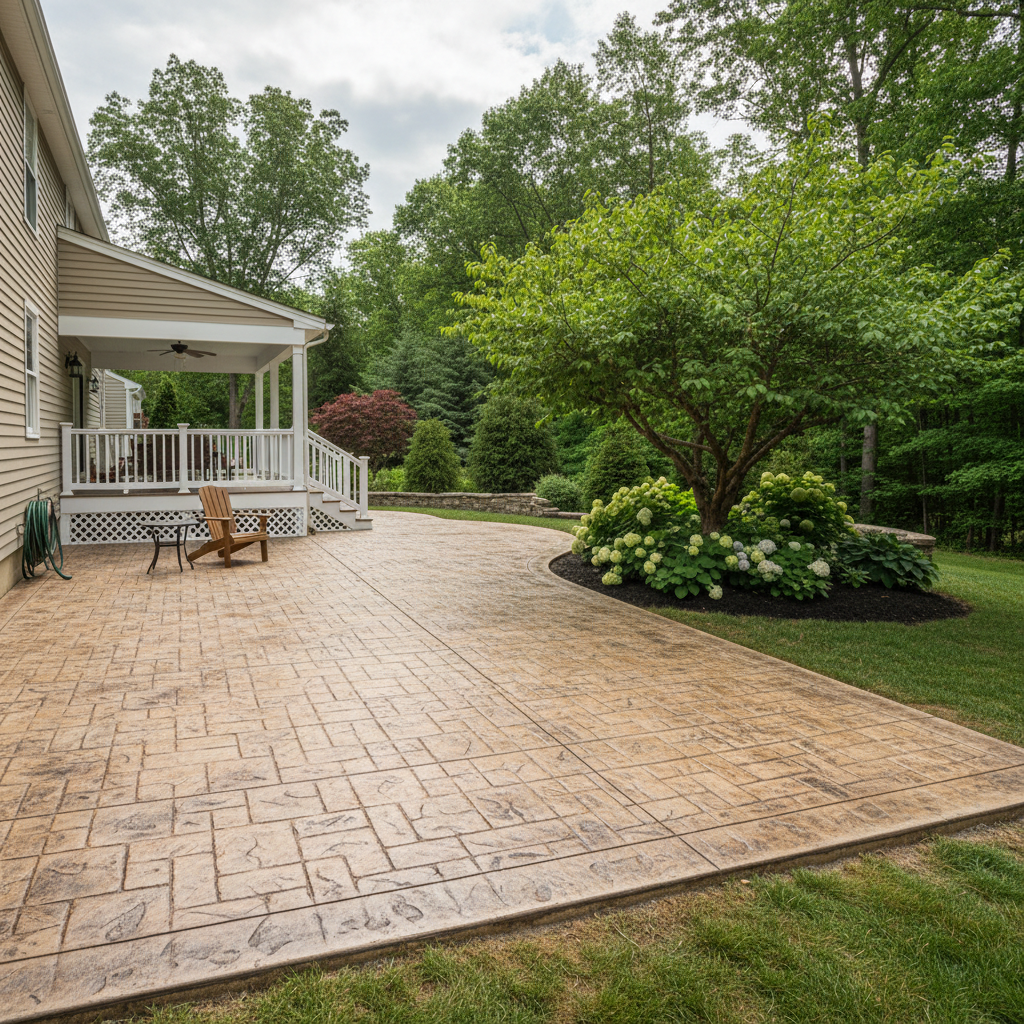
So, you're thinking about sprucing up your Cranston home with some stamped concrete? That's a smart move. It adds a ton of curb appeal and can really transform a space, whether it's a patio, walkway, or even a driveway. But before you jump in, you need a plan. It's not just about picking a pattern and color; there's a whole process involved. As a local guy who's been doing this for years with TH Concrete Co., I've seen it all. Here's what you need to know to make sure your project goes smoothly.
Understanding Your Project Timeline
Let's talk about timing. This isn't a weekend DIY job, even for the pros. A typical stamped concrete project, from start to finish, can take anywhere from a few days to a couple of weeks, depending on the size and complexity. And that's just the 'active' work time. You've also got to factor in lead times.
- Initial Consultation & Quote: This is step one. You call us, we come out, look at your space, talk about your vision, and give you an estimate. This usually happens pretty quickly, but getting on a contractor's schedule for the actual work can take time, especially during peak season (spring and summer in Rhode Island are busy!).
- Permits: Depending on what you're doing, you might need a permit from the City of Cranston. This isn't always the case for a small patio, but for larger driveways or anything that might affect drainage, it's a real possibility. Your contractor should handle this, but it adds time – sometimes a few weeks – to the start of the project.
- Material Ordering: Specialized concrete mixes, dyes, and release agents need to be ordered. While standard gray concrete is usually readily available, specific colors or additives might have a lead time.
- The Pour & Stamp: This is the most intensive part. Site preparation (excavation, grading, base material), forming, pouring, coloring, and stamping all happen in a relatively short window. For a decent-sized patio, this could be 2-3 days of active work.
- Curing & Sealing: This is crucial. Concrete needs to cure properly. You can't just walk all over it the next day. Initial curing takes a few days, but full strength can take weeks. Then, it needs to be cleaned and sealed. Sealing usually happens a week or two after the pour, once the concrete has had time to 'breathe' and dry out. Don't skip this; it protects your investment.
What to Expect During the Process
When we're on site, it's going to look a bit like a construction zone for a while. Don't be surprised.
- Excavation and Prep: We'll be digging out the area, removing existing grass or old concrete. There will be dirt, and possibly some noise from machinery. We'll lay down a proper gravel base, compact it, and set up forms to define the edges of your new concrete. This base is critical, especially with our Cranston clay soils that can shift with freezing and thawing cycles. A good base prevents cracking down the line.
- The Pour: A concrete truck will arrive. This is usually a quick, efficient process. The concrete gets poured, leveled, and then our team gets to work with the colors and stamps. It's a bit of an art form, honestly. We're working against the clock as the concrete starts to set.
- Drying and Curing: Once it's stamped, we'll let it be. You'll need to keep pets and kids off it. We'll give you clear instructions on when it's safe for light foot traffic and then for heavier use.
- Cleaning and Sealing: After the initial cure, we'll come back to clean off any release agent residue and then apply the sealer. This brings out the color and protects the surface.
How to Prepare Your Property
You can help make things go smoother for everyone.
- Clear the Area: Move any patio furniture, grills, potted plants, or anything else out of the work zone. We need clear access.
- Mark Sprinklers/Utilities: If you have an irrigation system, underground dog fence, or any other buried lines, show us where they are. We don't want to hit them.
- Access: Make sure we have a clear path for our equipment and the concrete truck. If you have a narrow gate or specific access points, let us know upfront.
- Communicate: If you have any questions or concerns during the project, just ask. That's what we're here for.
Crucial Questions to Ask Before Signing a Contract
Don't just sign the first thing put in front of you. You're making a significant investment in your home. Ask these questions:
- Can I see your portfolio of stamped concrete projects? Look for examples that match the style you're going for.
- Are you licensed and insured in Rhode Island? This is non-negotiable. Don't work with anyone who isn't. Ask for proof.
- What's included in the price? Get a detailed breakdown. Does it include excavation, base material, concrete, color, stamping, sealing, and cleanup? What about disposal of old concrete if applicable?
- What kind of warranty do you offer on your work? A reputable contractor will stand behind their product and installation.
- How do you handle unexpected issues? Sometimes things come up – unforeseen underground obstacles, for example. Understand how those might affect the timeline or cost.
- What's the payment schedule? A small deposit is common, but be wary of contractors asking for a huge percentage upfront.
- How long will the project take, start to finish? Get a realistic timeframe.
- What maintenance will I need to do for the stamped concrete? Good contractors will tell you how to care for your new surface to keep it looking great for years.
Picking the right contractor is just as important as picking the right pattern. Take your time, do your homework, and you'll end up with a beautiful, durable stamped concrete surface that you'll enjoy for years. If you're in Cranston or the surrounding areas, give TH Concrete Co. a call. We're always happy to talk through your project ideas.